![The fallout from the Olympic women’s doubles badminton competition continues to claim casualties, with up to five badminton careers effectively over by the end of next week. Kira Rin takes […]](http://www.badzine.net/wp-content/uploads/Newsflash-thumbnail.png "Round Robin, a cycle of controversies?")
The fallout from the Olympic women’s doubles badminton competition continues to claim casualties, with up to five badminton careers effectively over by the end of next week. Kira Rin takes a look at the tournament design that made all the mayhem possible.
By Kira Rin, Badzine Correspondent. Photos: Badmintonphoto
For the first time since its inception, Olympic badminton had its playing format changed to group matches leading to elimination. In theory, round robin is supposed to provide a fair way to judge a player’s strength by having them play every possible opponent. The element of luck is to be reduced as an upset defeat would not irretrievably affect the ranking in a group and the final record would be seen to be more accurate as it was arrived over a period of equal competition against each other.
However, the round robin format has potential to cause some embarrassing controversies. For example, if in a round robin group, the 2 top players or pairs qualify but haven’t played yet, they may try to “influence” the match in order to get a better ranking depending on what the elimination draw looks like.
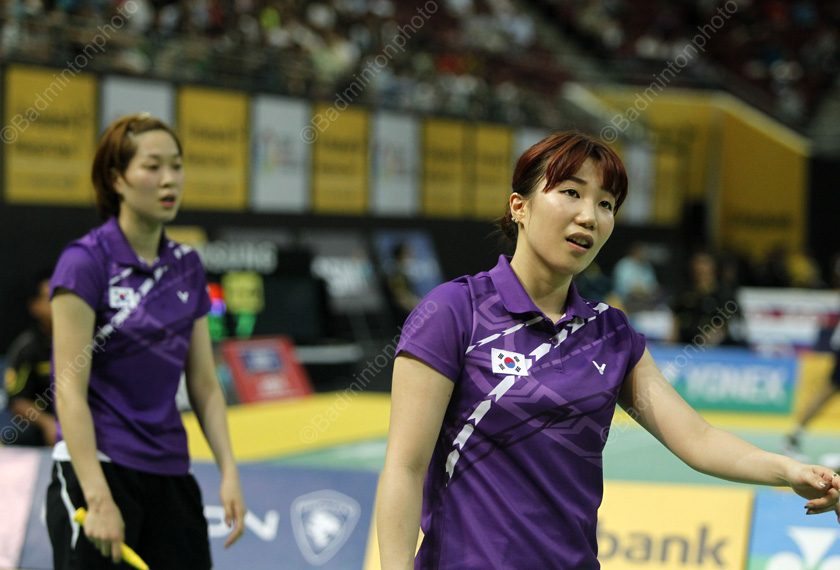
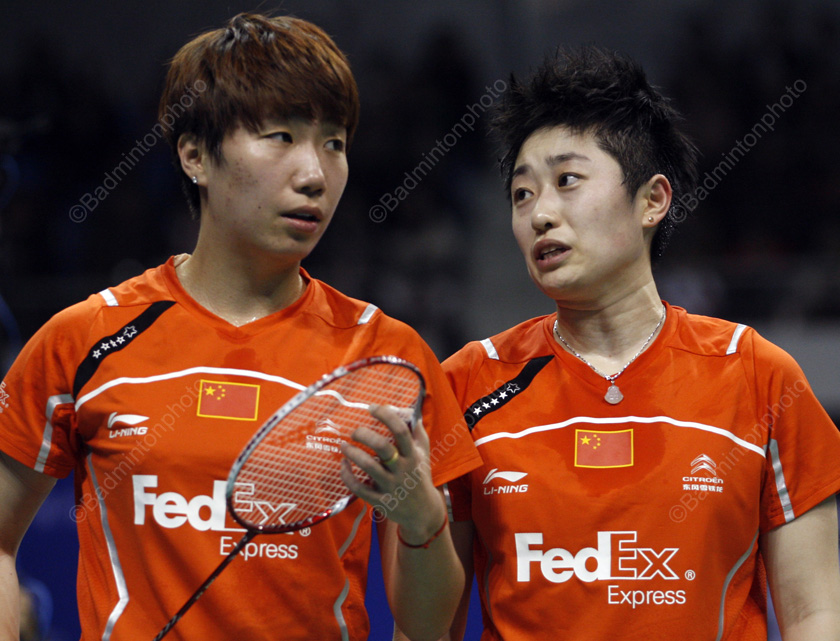
The most recent such incident, of course, came forth in this summer’s London Olympics, with 4 women’s doubles pairs attempting to throw their matches, against each other, no less. It seemed that due to an upset win of Denmark’s Christinna Pedersen and Kamilla Rytter Juhl over China’s Zhao Yunlei and Tian Qing, the winning pair in Group A would have to face Tian/Zhao in the semi-finals. In order to ensure the best possible medal winning draw, China would have to get its next women’s doubles pair to lose in order to avoid an early China vs. China match.
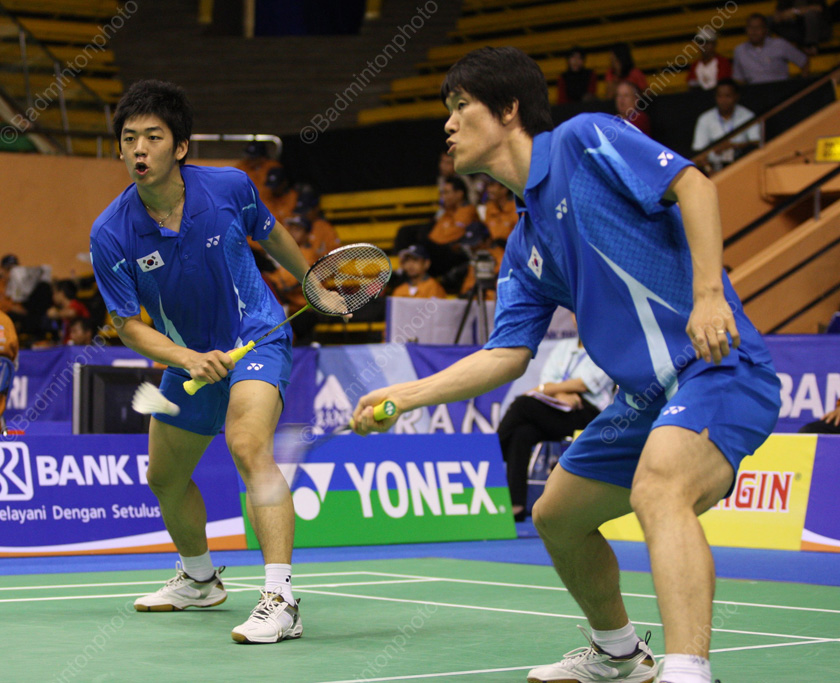
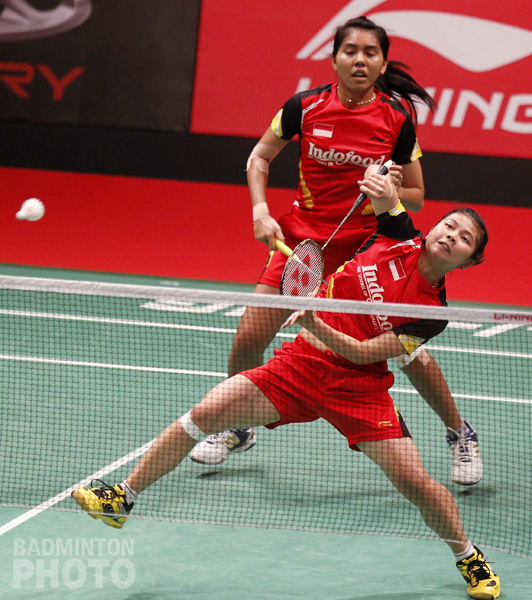
For some reason, the Koreans also realized the situation and attempted to lose to force the Chinese pairs to play each other, while themselves staying outside that half of the draw. This resulted in the bizarre situation in which opposing pairs attempted to lose instead of win. The same goes for the Indonesians vs. the Koreans in the following match. The problem there was that, due to the upset win, the box’s second place suddenly became very attractive and advantageous to the players as it would guarantee a good distance from the top Chinese pair.
The Olympic event comes every 4 years, and only the athletes themselves know the hard work of sweat and effort put in to achieve their “Olympic dream” of the prestigious gold medal. It is expected of all athletes to uphold the standard of sportsmanship when they compete. However, it was clearly a very difficult to ask of athletes to maintain their sportsmanship when winning an individual match can actually mean hindering their chance at the medal. It would be a very difficult decision for an athlete to choose between sportsmanship and their precious chance at the medals.
Almost as famous as the Olympics, football’s FIFA World Cup is another tournament that uses the same format of round robin leading to an elimination round. As the FIFA World Cup has used the same format consistently throughout its history – apart from its use of single elimination back in 1934 and 38 – and FIFA has found its own way of dealing with the issue of the motivation to win every round robin match.
After all, football is not without its share of controversies arising from the use of the round robin format. For example, in the 1998 Tiger Cup, Thailand and Indonesia were fined for trying to lose their match to secure an easier bracket. Also earlier in the 1994 Caribbean Cup, the round robin combined with a bizarre rule saw a match descend into a farce where a team tried to score the ball into either goal while the opposition defended both goals.
FIFA created a rule 1968 by which all the final group games would be held simultaneously. This leaves teams less sure of what result they will need to advance into a certain bracket in the knockout round. Other formats, of course, are already more or less immune to the problems, as with the Olympic singles competition, where only the group winner advanced to the elimination round but the full elimination tree format used in the first five Olympic Games is a more classic example.
One needn’t look as far afield as football to find examples of exploitation of round robin loopholes, however, nor of effective solutions to it. In the 2008 Thomas Cup, the Korean team fielded a total of four singles players in doubles roles, three doubles player in singles matches and one scratch pairing in a blatant effort to finish at the bottom of their group and thereby avoid playing China until the final.
Although the BWF found no evidence of the fielded players actually tanking the matches they were virtually guaranteed to lose, it nevertheless decided to close the loophole by changing all subsequent group competitions such that the draw for who would play teams from which group would be held after the completion of the group stage.
Needless to say, the loophole was left open for the 2012 Olympic doubles competitions, the pattern for the knockout round was decided in advance, and each team had a very good idea who they would be playing if they placed second in their group as opposed to first.
The following is an excerpt from an article written by Dr. Jason Hartline, Associate Professor at Northwestern University and Robert Kleinberg, Assistant Professor at Cornell University:
There is a science that studies the design of rules for strategic play, and it is called mechanism design. In the general framework of mechanism design, a planner asks how the rules of a system should be devised so that when participants behave strategically, a desirable outcome is achieved. It has been applied with great success to a wide range of problems, such as matching medical school graduates to hospitals, allocating takeoff and landing slots at airports, selling advertisements on the Internet, and voting in elections.
Applied to sporting events, mechanism design dictates that losing a match should never improve a team’s chances of winning a tournament. That principle was violated in Olympic badminton when an upset loss by the world’s second-ranked team gave the remaining teams an incentive to lose their final round-robin match and thus avoid an unfavorable pairing against strong opponents in the playoff stage of the competition. Ironically, this problem can never arise in a single-elimination tournament, the format in use from badminton’s Olympic debut up until this year.
Therefore, by the principles described by Dr. Hartline and Kleinberg, winning a match must always improve the athletes’ chance at the medal in order to guarantee that they will readily put forward their best efforts to win. By the same token, one cannot fault the athletes for not playing their best at the Olympics, for they were actually trying their hardest to win a medal, though in a much unexpected way.
The athletes have indeed been faulted, of course: first by the BWF and, in the case of the four Koreans, also by their national association.
What remains to be seen is whether future badminton tournaments will follow the rule of mechanism design mentioned above, with round robin rules, where used, designed such that winning will offer the greatest advantage possible.
The above excerpt from Dr. Jason Hartline and Robert Kleinberg ‘s article “Badminton and the science of rule making” was reproduced with permission. The original article can be read here.

![Chae Yu Jung / Seo Seung Jae became the only repeat mixed doubles Aussie champions during its Sydney era. Shi Yu Qi and Ou Xuan Yi / Liu Yu Chen […]](http://www.badzine.net/wp-content/uploads/ngg_featured/cr_20221120_1349_AustralianOpen2022_BPLV0036_rotator-36x36.jpg "AUSTRALIAN OPEN Finals – Historic repeat the feat")
![Blink or leave your seat to buy fast food and it would turn out to have a different outcome from what you were initially led to believe in more than […]](http://www.badzine.net/wp-content/uploads/ngg_featured/cr_20221119_1522_AustralianOpen2022_BPLV0034_rotator-36x36.jpg "AUSTRALIAN OPEN SF – Fancy seeing you on Sunday")
![In doubles, at a baseline level the pair needs to be reliable and then have something special on top of that to make it further. By Aaron Wong, Badzine Correspondent […]](http://www.badzine.net/wp-content/uploads/2022-QF-WD1-36x36.jpg "AUSTRALIAN OPEN QF – Finding that little bit extra")
![Drama mixed with entertainment fueled the marquee singles matches. By Aaron Wong, Badzine Correspondent live in Sydney. Photos: Badmintonphoto (archives) World #3 vs world #27 The ultra-popular and charismatic 2021 […]](http://www.badzine.net/wp-content/uploads/ngg_featured/cr_20220715_2118_SingaporeOpen2022_BPYL4448_rotator-36x36.jpg "AUSTRALIAN OPEN R16 – What actually happened in the last match of the night?")
![It was like a final in the first round as Seo Seung Jae and Kang Min Hyuk took on recent Hylo Open winners Lu/Yang in Sydney. By Aaron Wong, Badzine […]](http://www.badzine.net/wp-content/uploads/ngg_featured/cr_20220705_1622_MalaysiaMasters2022_BPES3440_rotator-36x36.jpg "AUSTRALIAN OPEN R32 – Wish it were longer")





Leave a Reply